
Environmental Health and Safety Explained
Environmental Health and Safety (EHS) is a broad approach to protecting employees, workplaces, and the environment from potential hazards. It brings together workplace safety, occupational health, environmental protection, and regulatory compliance to help organizations identify risks and prevent harm.
EHS applies across a wide range of industries, from construction and manufacturing to healthcare, offices, and laboratories. While specific responsibilities may vary by workplace, the goal remains the same: identify potential risks, put appropriate controls in place, and create a safer and more responsible working environment.
What Does EHS Mean?
EHS stands for Environmental, Health, and Safety. These three areas work together to manage risks that can affect employees, workplaces, and the environment.
Environmental focuses on reducing the impact workplace activities can have on the surrounding environment, including waste, emissions, spills, and pollution. Health focuses on workplace conditions that may affect employees, such as exposure to hazardous substances, excessive noise, or other occupational risks. Safety focuses on preventing injuries and incidents by identifying hazards and establishing safe work practices.
Together, these areas make EHS much broader than simply preventing workplace accidents. An effective EHS approach considers employee well-being, workplace risks, environmental responsibilities, and compliance requirements.
What Does Environmental Health and Safety Cover?
EHS covers many aspects of how an organization manages workplace and environmental risks. This can include workplace safety, occupational health, environmental protection, hazard identification, risk management, emergency preparedness, and regulatory compliance.
For example, an EHS program may involve identifying hazards during workplace inspections, assessing employee exposure to certain risks, preparing emergency procedures, managing workplace waste, maintaining safety records, and ensuring that applicable regulations are being followed. The specific focus will depend on the organization's industry, operations, and potential hazards.
Why Is EHS Important?
EHS is important because it provides organizations with a structured way to identify risks, control hazards, and protect employees and the environment. Rather than addressing problems only after an incident occurs, an effective EHS program focuses on prevention and continuous improvement.
EHS also helps organizations meet applicable health, safety, and environmental requirements while reducing the likelihood of workplace incidents and environmental harm. When safety practices are consistently communicated, followed, and reviewed, EHS can also contribute to a stronger workplace safety culture where both employers and employees take an active role in managing risks.
Common EHS Responsibilities in the Workplace
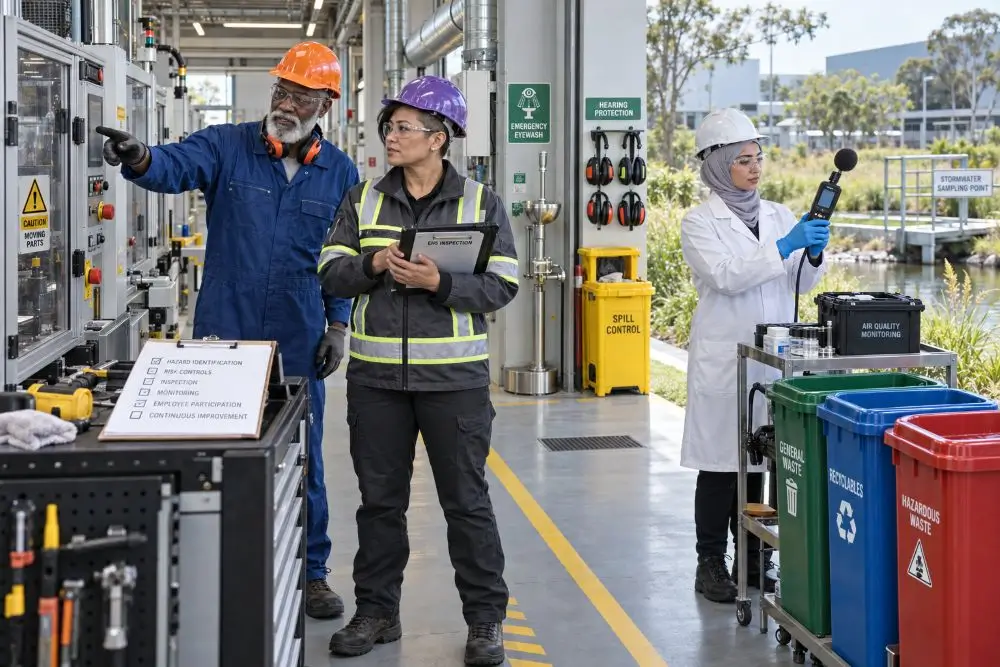
EHS professionals and teams help organizations manage workplace health, safety, and environmental risks. Their responsibilities can vary depending on the size and type of organization, but their overall role is to identify potential risks, establish appropriate controls, support employee awareness, and help ensure that workplace practices meet applicable requirements. Here are the common EHS responsibilities include:
- Conducting workplace inspections
- Identifying and assessing hazards
- Developing and updating safety procedures
- Providing employee training
- Investigating workplace incidents
- Maintaining safety and environmental records
- Monitoring EHS compliance
EHS hazards can vary significantly depending on the workplace, industry, and type of work being performed. Common examples include physical hazards such as falls, machinery, and excessive noise; chemical hazards involving hazardous substances or exposure; and biological hazards such as bacteria and viruses. Workplaces may also have ergonomic hazards caused by repetitive tasks or awkward postures, as well as environmental hazards involving waste, emissions, spills, or pollution.
What Is an EHS Management System?
An EHS management system is a structured approach organizations use to identify risks, establish controls, and manage health, safety, and environmental responsibilities. It can include workplace policies, safety procedures, employee training, inspections, incident reporting, and ongoing monitoring.
EHS management is not a one-time activity. Organizations need to regularly review their practices, address new or changing hazards, and make improvements to keep their EHS programs effective over time.
Who Is Responsible for EHS?
EHS is a shared responsibility across an organization. Employers and management are responsible for providing a safe workplace, establishing appropriate policies, and making sure necessary resources and training are available. EHS professionals support these efforts by identifying risks, developing procedures, conducting inspections, and monitoring compliance.
Employees also play an important role by following established safety procedures, using required protective equipment, reporting hazards, and participating in training. Effective EHS management depends on everyone understanding and carrying out their responsibilities.
EHS Compliance and Regulations
EHS requirements depend on factors such as the organization's industry, activities, location, and potential hazards. In the United States, workplace safety requirements may come from federal, state, and local authorities, with OSHA playing a central role in establishing and enforcing workplace safety and health standards.
Environmental requirements may involve other federal, state, or local regulatory agencies. Organizations need to understand which requirements apply to their operations and maintain practices that support ongoing compliance.
How Can a Workplace Improve Its EHS Program?
An effective EHS program should be regularly reviewed and improved as workplace conditions, processes, and risks change. Organizations can strengthen their EHS efforts by identifying hazards early, keeping employees informed, and making sure safety procedures remain practical and up to date. Here are some practical ways to improve an EHS program:
- Perform regular hazard assessments
- Provide appropriate employee training
- Keep safety procedures updated
- Encourage employees to report hazards and incidents
- Conduct regular workplace inspections
- Review incidents and corrective actions
- Monitor the effectiveness of the EHS program
Conclusion
Environmental Health and Safety is an important part of creating safer, healthier, and more responsible workplaces. By identifying hazards, managing risks, protecting the environment, and meeting applicable requirements, organizations can take a proactive approach to workplace health and safety.
A strong EHS program is not limited to policies or compliance. It requires ongoing training, communication, inspections, reporting, and improvement, with employers, EHS professionals, and employees all contributing to a safer workplace.
Related Posts
Environmental Health and Safety Explained

Can Felons Work in Environmental Health & Safety?