Artificial Intelligence in Environmental Health & Safety
Artificial Intelligence (AI) is rapidly becoming a valuable tool in Environmental, Health, and Safety (EHS) management, helping organizations enhance workplace safety, streamline compliance efforts, and make more informed decisions. By analyzing large volumes of data, identifying patterns, and automating routine tasks, AI enables EHS teams to take a more proactive approach to risk management.
Moreover, across industries such as manufacturing, construction, healthcare, and logistics, AI-powered technologies are transforming traditional EHS programs. From predictive analytics and real-time hazard detection to automated reporting and compliance monitoring, organizations are leveraging AI to improve operational efficiency while reducing workplace incidents.
However, despite its many benefits, AI also presents challenges that organizations must carefully consider. Concerns related to data privacy, implementation costs, system reliability, and overreliance on automation can impact the effectiveness of AI-driven EHS initiatives. Understanding both the opportunities and drawbacks of AI is essential for organizations seeking to implement these technologies responsibly and maximize their value in creating safer workplaces.
Understanding AI in Environmental, Health, and Safety (EHS)
Artificial Intelligence (AI) refers to computer systems that can perform tasks typically requiring human intelligence, such as analyzing data, recognizing patterns, making predictions, and supporting decision-making. In business operations, common AI technologies include machine learning, computer vision, natural language processing, and predictive analytics. These technologies help organizations process large amounts of information more efficiently and uncover insights that might otherwise be overlooked.
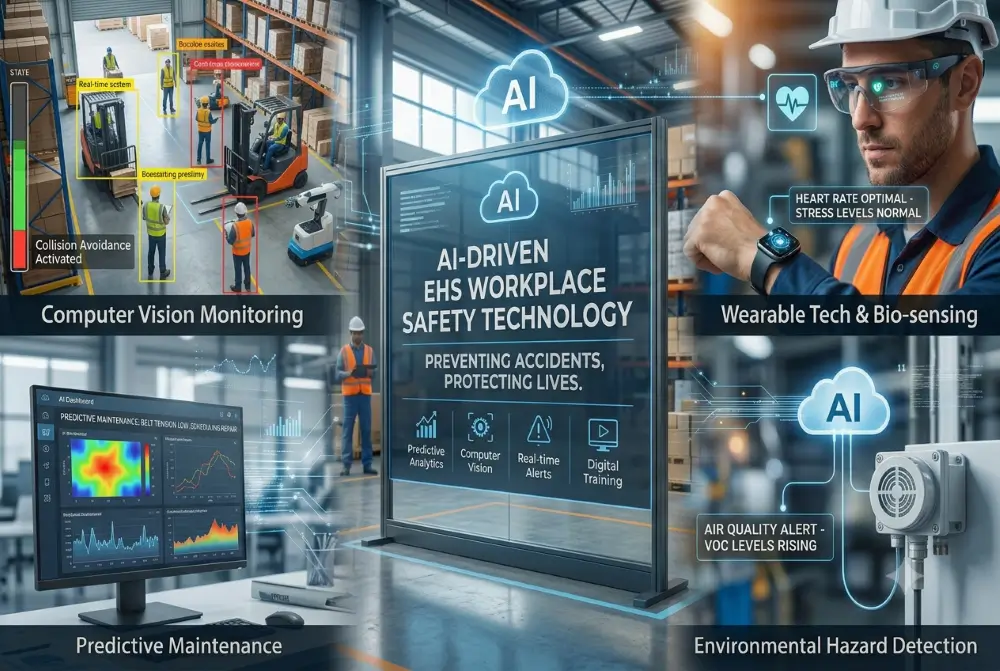
In the field of Environmental, Health, and Safety (EHS), AI is being used to improve workplace safety and compliance through predictive risk assessments, computer vision-based monitoring systems, automated incident reporting, and wearable safety devices. As workplaces become more complex and generate increasing volumes of safety-related data, organizations are turning to AI to identify potential hazards, streamline compliance activities, and support proactive safety management. This growing demand for data-driven decision-making is one of the key reasons AI is gaining significant attention across modern EHS programs.
Key Opportunities of AI in EHS
Artificial Intelligence is helping organizations move beyond reactive safety management toward more proactive and data-driven EHS practices. By automating complex processes and uncovering valuable insights from workplace data, AI can improve both safety performance and operational efficiency. As adoption grows, businesses are finding new ways to leverage AI to strengthen risk management and compliance efforts.
Improved Hazard Identification
AI-powered systems can continuously monitor workplaces and detect unsafe conditions as they emerge. Through advanced analytics and pattern recognition, AI can identify risks that may be difficult for human observers to detect during routine inspections.
Predictive Risk Management
By analyzing historical incident records, equipment performance data, and workplace trends, AI can help forecast potential safety risks before they occur. This enables organizations to take preventive measures and allocate resources more effectively.
Enhanced Compliance Monitoring
AI can simplify compliance management by tracking regulatory requirements and monitoring adherence to safety procedures. Automated inspections, documentation reviews, and audit support can reduce the administrative workload placed on EHS teams.
Faster Incident Investigation
AI helps organize large amounts of incident-related information, making investigations more efficient and accurate. By identifying contributing factors and recurring trends, organizations can develop stronger corrective and preventive action plans.
Better Employee Safety
Modern AI technologies support worker protection through smart personal protective equipment (PPE), wearable devices, and real-time monitoring tools. These solutions can provide immediate alerts when unsafe conditions or health-related concerns are detected.
Data-Driven Decision Making
AI transforms raw safety data into actionable insights that support strategic planning and resource allocation. EHS leaders can use these insights to prioritize high-risk areas, evaluate program effectiveness, and make informed decisions that improve workplace safety outcomes.
Real-World Applications of AI in EHS
Artificial Intelligence is no longer a future concept in Environmental, Health, and Safety management—it is actively being used across a wide range of industries to improve workplace safety, enhance operational visibility, and support compliance efforts. By processing large amounts of real-time and historical data, AI helps organizations identify risks more quickly and respond to potential safety concerns before they escalate into incidents.
The flexibility of AI allows it to address industry-specific challenges while supporting broader EHS objectives. Whether monitoring equipment performance, improving worker safety, tracking compliance, or analyzing workplace trends, AI technologies are helping organizations create safer and more efficient working environments. As adoption continues to grow, AI is becoming an increasingly valuable tool for proactive risk management.
Common Real-World Applications of AI in EHS
Manufacturing Facilities
Monitoring equipment performance, identifying maintenance needs, and analyzing workplace safety trends to reduce operational risks.
Construction Sites
Detecting hazards in real time, monitoring high-risk activities, and verifying proper use of personal protective equipment (PPE).
Warehousing and Logistics
Improving vehicle and pedestrian safety, optimizing traffic flow, and identifying operational risks within busy work environments.
Healthcare Environments
Tracking employee exposure to workplace hazards, supporting incident reporting processes, and monitoring compliance with safety protocols.
Oil and Gas Operations
Monitoring high-risk environments, detecting abnormal operating conditions, and supporting emergency response preparedness.
Mining Facilities
Identifying environmental hazards, monitoring worker locations, and enhancing situational awareness in hazardous work areas.
Utilities and Energy Facilities
Supporting infrastructure inspections, equipment monitoring, and predictive maintenance programs to reduce safety risks.
Corporate and Office Environments
Improving building safety, indoor environmental monitoring, and workplace wellness initiatives through smart systems and analytics.
Potential Drawbacks of AI in EHS
While AI offers significant benefits for Environmental, Health, and Safety management, it is not without challenges. Organizations must carefully evaluate the limitations and risks associated with AI adoption to ensure these technologies support, rather than hinder, workplace safety objectives. Understanding potential drawbacks can help businesses implement AI more responsibly and effectively.
Data Privacy and Security Concerns
Many AI-powered EHS systems rely on collecting and analyzing large amounts of workplace and employee data. This can raise concerns regarding privacy, data protection compliance, and the security of sensitive information, particularly if systems are vulnerable to cyber threats.
Dependence on Data Quality
The effectiveness of AI is heavily dependent on the quality of the data it receives. Inaccurate, incomplete, or outdated information can lead to unreliable insights, while biased datasets may produce recommendations that do not accurately reflect real workplace conditions.
High Implementation Costs
Deploying AI solutions often requires substantial upfront investment in software, hardware, and infrastructure. Organizations may also face additional expenses related to system integration, employee training, technical support, and ongoing maintenance.
Risk of Overreliance on Automation
Although AI can automate many EHS tasks, relying too heavily on technology may reduce critical human oversight. AI systems may not always recognize situational nuances or workplace-specific factors, making professional judgment essential for effective decision-making.
Employee Resistance and Trust Issues
Employees may be hesitant to embrace AI technologies due to concerns about workplace surveillance, privacy, or potential job displacement. Successfully implementing AI often requires clear communication, transparency, and change management efforts to build trust and encourage adoption.
Conclusion
Artificial Intelligence is reshaping the way organizations approach Environmental, Health, and Safety management by enabling more proactive, efficient, and data-driven safety programs. From hazard identification and predictive risk management to compliance monitoring and incident analysis, AI offers significant opportunities to improve workplace safety and operational performance.
However, successful adoption requires more than technology alone. Organizations must carefully address challenges such as data quality, privacy concerns, implementation costs, and the need for ongoing human oversight. When combined with the expertise of EHS professionals, AI can serve as a powerful tool for strengthening safety culture, reducing workplace risks, and supporting long-term organizational resilience.
Related Posts
Understanding Workplace Psychological Safety
Environmental Health and Safety Explained